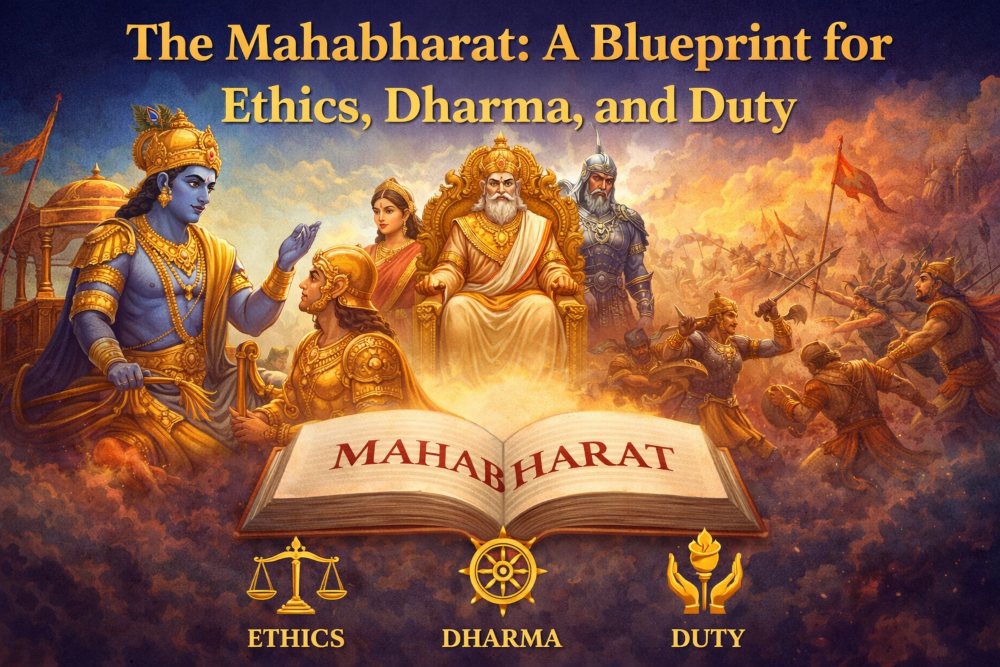
The Mahabharat is not merely an ancient epic or a collection of heroic stories—it is a timeless blueprint for living a meaningful, responsible, and spiritually aligned life. For thousands of years, seekers, leaders, scholars, and devotees have turned to this sacred text to understand the deeper principles of ethics, dharma (righteous living), and duty (karma). Today, authentic editions from trusted sources such as the ISKCON Mayapur Store allow modern readers to explore the Mahabharat in its original spiritual depth and philosophical clarity. Unlike ordinary books, the Mahabharat presents real-life dilemmas, emotional conflicts, moral struggles, and spiritual realizations that mirror our daily experiences. It teaches not through abstract theory, but through powerful stories of human choices and their consequences. In an age filled with confusion, moral compromise, and fast-paced distractions, the Mahabharat stands as a guiding light, offering a structured roadmap for ethical decision-making and purposeful living.
Understanding the Mahabharat Beyond a Historical Epic
Many people see the Mahabharat simply as a legendary war story or a cultural treasure of India. However, its deeper purpose is far more profound. The Mahabharat is a philosophical encyclopedia that addresses every aspect of human life—relationships, leadership, justice, devotion, self-discipline, sacrifice, and spiritual awakening.
The characters of the Mahabharat are not perfect heroes. They struggle, make mistakes, face temptations, and learn from consequences. This realism makes the teachings relatable and practical rather than idealistic fantasies. Arjuna’s confusion, Yudhishthira’s moral dilemmas, Bhishma’s lifelong vows, Draupadi’s dignity, and Krishna’s divine guidance all represent different dimensions of ethical growth.
The epic constantly asks important questions:
- What is the right action when choices are unclear?
- How do we balance personal emotions with social responsibility?
- Can truth always be spoken, even when it causes harm?
- How should power and authority be used ethically?
- What is the ultimate purpose of human life?
These questions remain relevant in modern society, making the Mahabharat a living guide rather than a historical artifact.
Dharma: The Foundation of Moral Order
Dharma is the central pillar of the Mahabharat. It does not mean rigid rules or blind religious rituals. Dharma represents the natural law that sustains harmony in individual life and society. It includes honesty, compassion, responsibility, respect, discipline, and service.
One of the most powerful lessons from the Mahabharat is that dharma is often complex. Situations are rarely black and white. What is right in one context may become wrong in another. This flexible yet principled understanding helps individuals develop mature moral intelligence instead of mechanical obedience.
Yudhishthira, known as Dharmaraja, constantly struggles to uphold truth and righteousness even when it costs him personally. His journey teaches that dharma requires patience, humility, and self-control. On the other hand, characters like Duryodhana represent ego-driven ambition that ignores moral boundaries, leading to destruction.
The Mahabharat emphasizes that true dharma protects not only social order but also inner peace. When actions align with righteousness, the mind becomes stable and conscience remains clear.
Ethics Through Human Conflict and Consequences
Rather than preaching moral rules, the Mahabharat demonstrates ethics through living situations. Every major event shows the ripple effect of decisions across generations.
For example, the dice game illustrates how greed, pride, and manipulation can destroy families and kingdoms. Draupadi’s humiliation becomes a moral turning point that exposes the failure of leaders who remain silent in the face of injustice. This teaches that ethical responsibility includes speaking up against wrongdoing, not remaining neutral for convenience.
Karna’s loyalty to Duryodhana shows the conflict between gratitude and righteousness. While loyalty is a virtue, blind loyalty toward unethical leadership becomes destructive. This dilemma remains highly relevant in corporate, political, and social environments today.
Bhishma’s lifelong vow demonstrates the power and danger of rigid commitments. His inability to adapt his vow to changing moral circumstances results in prolonged suffering. The lesson is that ethics require wisdom, not stubborn attachment.
These layered narratives create moral sensitivity, helping readers develop discernment rather than simplistic judgment.
Duty (Karma): Action With Responsibility
The Mahabharat strongly teaches that every individual has duties based on their role in society, family, and spiritual life. Duty does not mean forced obligation; it means conscious responsibility aligned with higher purpose.
Arjuna’s hesitation on the battlefield symbolizes the universal human struggle between fear and responsibility. Lord Krishna’s guidance in the Bhagavad Gita explains that one must perform duty without selfish attachment to results. This principle of karma yoga builds discipline, courage, and emotional stability.
Modern professionals, entrepreneurs, parents, teachers, and leaders can apply this principle by focusing on ethical excellence rather than personal gain. When actions are guided by service and integrity, success becomes meaningful rather than hollow.
The Mahabharat also teaches that neglecting duty creates imbalance. When rulers misuse power or citizens abandon moral responsibility, social harmony collapses. Therefore, duty protects both individual character and collective stability.
Leadership Lessons Rooted in Ethical Governance
The Mahabharat provides timeless leadership wisdom that remains applicable in modern management and governance. True leadership is portrayed as service-oriented, transparent, and compassionate.
Yudhishthira’s leadership emphasizes fairness, humility, and accountability. He consults elders, respects wisdom, and accepts consequences when wrong. Krishna demonstrates strategic intelligence balanced with moral vision. His actions aim to restore dharma rather than personal dominance.
In contrast, Duryodhana represents ego-driven leadership fueled by entitlement and insecurity. His refusal to compromise leads to catastrophic destruction. This contrast teaches that leadership without ethics ultimately harms both the leader and followers.
Modern organizations can learn from these examples by fostering ethical decision-making, long-term thinking, emotional intelligence, and social responsibility.
Spiritual Ethics: Beyond External Morality
The Mahabharat does not stop at social ethics. It goes deeper into spiritual ethics—the purification of consciousness. External good actions become incomplete without inner integrity.
Krishna teaches that desire, anger, greed, and ego cloud judgment and lead to suffering. Self-discipline, devotion, gratitude, and humility elevate human consciousness. When actions are aligned with divine purpose, life becomes balanced and fulfilling.
The concept of surrender does not mean weakness but intelligent alignment with higher wisdom. By cultivating spiritual awareness, individuals naturally make ethical choices without force.
This spiritual foundation makes the Mahabharat not just a moral textbook but a transformational guide for personal evolution.
Family, Relationships, and Emotional Dharma
The Mahabharat offers profound lessons about relationships, loyalty, forgiveness, and emotional maturity. Families in the epic face jealousy, misunderstanding, sacrifice, and reconciliation.
Kunti’s maternal struggles, Gandhari’s grief, and Draupadi’s resilience show how emotional intelligence shapes moral strength. Respecting elders, honoring commitments, and practicing forgiveness prevent long-term bitterness.
Modern families can learn conflict resolution, patience, and empathy from these narratives. Healthy relationships require conscious effort, honest communication, and ethical boundaries.
Justice, Law, and Social Responsibility
Justice is another major theme. Kings are expected to protect citizens, punish wrongdoing fairly, and uphold moral law. Courts must remain impartial, and rulers must prioritize public welfare over personal interest.
The Mahabharat repeatedly warns against corruption, misuse of power, and manipulation of law. These warnings remain relevant in contemporary societies where ethical governance determines national stability and public trust.
Citizens are also responsible for ethical conduct. Society thrives when individuals act responsibly rather than blaming authority alone.
The Bhagavad Gita: The Heart of Ethical Philosophy
Embedded within the Mahabharat, the Bhagavad Gita represents the distilled essence of ethical and spiritual wisdom. It integrates action, knowledge, devotion, and discipline into one harmonious philosophy.
Key teachings include:
- Perform duty without attachment to results.
- Control senses and mind.
- Cultivate devotion and humility.
- See all beings with equal respect.
- Align life with divine purpose.
These principles help individuals navigate stress, ambition, failure, success, and uncertainty with inner stability.
Why the Mahabharat Remains Relevant in Modern Life
Despite technological advancement, human struggles remain the same—greed, fear, ambition, attachment, confusion, and moral conflict. The Mahabharat addresses these universal issues with timeless clarity.
Students learn discipline and integrity. Professionals learn ethical leadership. Families learn emotional balance. Spiritual seekers find higher purpose. Society benefits from moral stability.
Unlike modern self-help books that offer temporary motivation, the Mahabharat builds character from within.
Choosing the Right Edition for Authentic Understanding
To truly benefit from the Mahabharat, it is important to read an authentic, well-translated edition that preserves philosophical depth and spiritual accuracy. Reliable editions maintain scriptural integrity, clear commentary, and faithful translations.
Trusted spiritual publishers ensure that readers receive original teachings without distortion or commercial dilution. Authentic sourcing protects cultural heritage and spiritual purity.
Practical Ways to Apply Mahabharat Teachings Daily
- Practice honesty even when inconvenient.
- Perform responsibilities sincerely without ego.
- Control emotional impulses before decision-making.
- Respect elders, teachers, and ethical authority.
- Cultivate gratitude and humility.
- Reflect regularly on moral choices.
- Balance ambition with compassion.
- Seek wisdom through spiritual study.
Small daily applications gradually transform character and life direction.
Conclusion: A Living Blueprint for Conscious Living
The Mahabharat is not simply a story of war and heroes—it is a comprehensive blueprint for ethical living, righteous action, and spiritual growth. It teaches how to navigate complexity with wisdom, how to serve society responsibly, and how to evolve beyond ego toward higher consciousness. Its lessons remain eternally relevant because they address the deepest layers of human nature.
By studying and applying its teachings sincerely, individuals can cultivate clarity, stability, purpose, and inner peace. In a world searching for authentic values, the Mahabharat continues to illuminate the path of dharma, duty, and divine alignment.

 Blue Moon