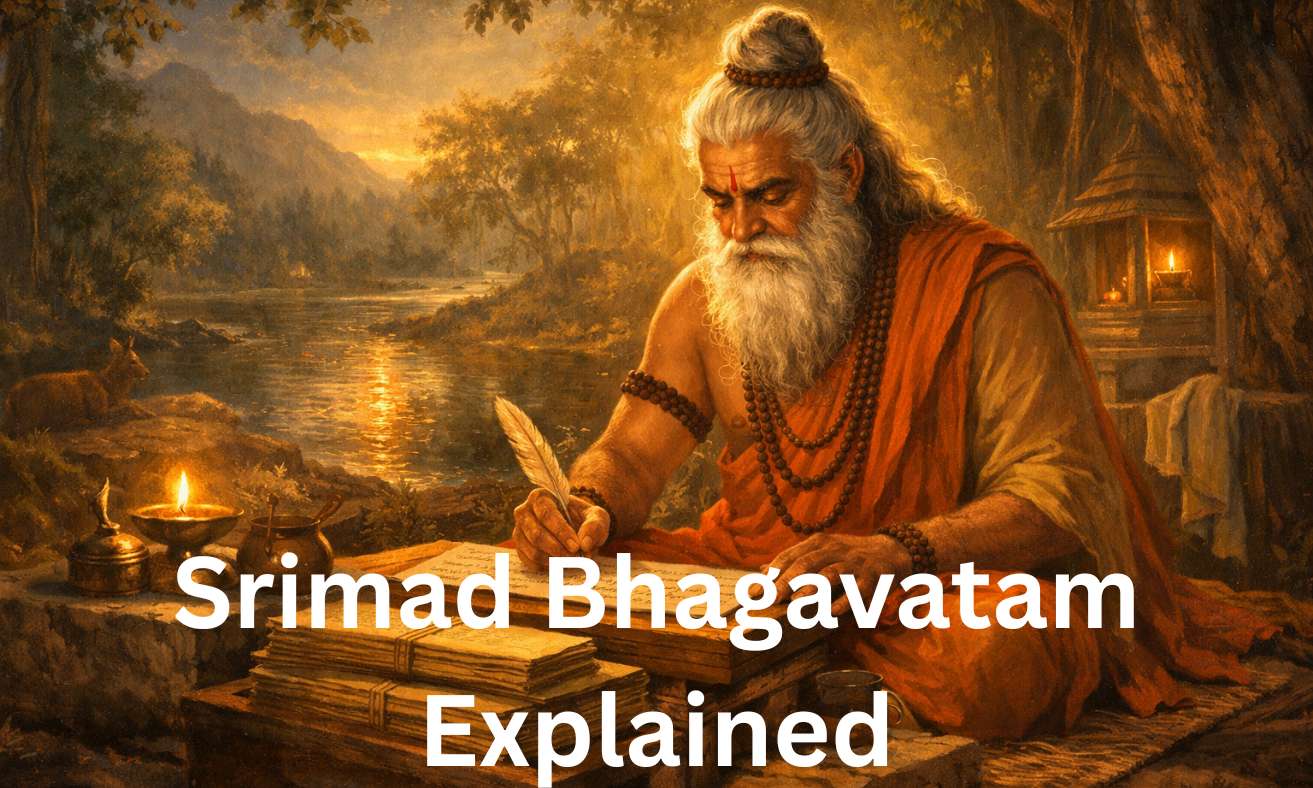
Srimad Bhagavatam Explained: History, Philosophy, and Devotion
Introduction
Among the timeless treasures of Vedic literature, Srimad Bhagavatam stands as a spiritual masterpiece that harmoniously blends history, philosophy, and devotion. Revered as the ripened fruit of the Vedic tree, this sacred scripture goes beyond ritual, mythology, or abstract speculation. It offers a living experience of divine truth centered on loving devotion to Lord Krishna.
For centuries, saints, scholars, and seekers have turned to Srimad Bhagavatam not only to understand the nature of God and the universe, but also to transform their inner lives. This article presents a of Srimad Bhagavatam ISKCON edition—its historical background, its profound philosophical vision, and its unique devotional essence.
Historical Background of Srimad Bhagavatam
The Vedic Context
Srimad Bhagavatam belongs to the ancient Vedic tradition of India, a body of spiritual knowledge transmitted through oral and written lineages over thousands of years. Within this tradition, the Puranas were composed to make deep philosophical truths accessible through narratives, dialogues, and examples drawn from human and divine history.
Among the eighteen Mahapuranas, Srimad Bhagavatam occupies a special place because of its exclusive focus on pure devotion (bhakti) and its rejection of materialistic or selfish religious goals.
Ved Vyasa and the Compilation of Bhagavatam
The history of Srimad Bhagavatam is inseparable from the life of the great sage Ved Vyasa, the compiler of the Vedas. After organizing the four Vedas, composing the Mahabharata, and authoring many Puranas, Vyasa felt an inner dissatisfaction. Despite his immense scholarship, his heart remained unfulfilled.
This dissatisfaction was resolved when his spiritual master, Narada Muni, instructed him that spiritual knowledge reaches perfection only when it directly glorifies the Supreme Lord and His loving pastimes. Acting on this guidance, Vyasa entered deep meditation and realized the Absolute Truth along with His energies. From this realization, Srimad Bhagavatam was revealed.
Thus, historically, Srimad Bhagavatam represents the final and mature conclusion of Vyasa’s life work.
Transmission Through Disciplic Succession
Rather than being a text frozen in history, Srimad Bhagavatam has been preserved through disciplic succession (parampara). Teachers and disciples transmitted not only the words but also the realized meaning of the scripture. This living tradition ensured that the devotional heart of the Bhagavatam remained intact across centuries.
Structure and Literary Design
Overall Composition
Srimad Bhagavatam is carefully structured to guide the reader step by step toward spiritual realization:
- 12 Cantos
- 335 Chapters
- Approximately 18,000 Verses
The arrangement is deliberate, moving from foundational philosophy to the most intimate expressions of divine love.
Progressive Spiritual Journey
- Early Cantos introduce the Absolute Truth, creation, and the purpose of human life.
- Middle Cantos describe incarnations, cosmic order, and exemplary devotees.
- The Tenth Canto reveals the personal pastimes of Lord Krishna and is considered the heart of the text.
- Final Cantos emphasize detachment, renunciation, and preparation for ultimate liberation.
This progression ensures that readers develop philosophical clarity and moral grounding before encountering the deepest devotional revelations.
Philosophical Foundations of Srimad Bhagavatam
The Nature of the Absolute Truth
Srimad Bhagavatam presents a comprehensive understanding of the Absolute Truth as personal, conscious, and full of qualities. While acknowledging impersonal and localized aspects of divinity, it establishes that the ultimate reality is Bhagavan—the Supreme Person who engages in loving relationships with devotees.
This philosophy reconciles seemingly opposing ideas: unity and diversity, transcendence and intimacy, infinity and personality.
The Soul and Its Eternal Identity
According to the Bhagavatam, every living being is an eternal soul, distinct from the temporary body and mind. Suffering arises when the soul forgets its true identity and becomes absorbed in material pursuits. Liberation is not annihilation of individuality, but restoration of the soul’s original loving relationship with God.
Karma, Time, and Material Nature
The text explains how karma binds the soul to repeated birth and death, governed by time and material nature. However, it also teaches that devotion has the power to transcend karma. When actions are offered in loving service, they no longer produce binding reactions.
READ ALSO:- Who Wrote the Garga Samhita?
Devotion (Bhakti): The Heart of the Bhagavatam
Bhakti as the Highest Path
Srimad Bhagavatam declares that bhakti-yoga is the highest spiritual path. Unlike practices motivated by material gain, mystic power, or even liberation, bhakti is performed solely for the pleasure of the Supreme Lord.
True devotion is characterized by:
- Freedom from selfish desire
- Continuous remembrance of God
- Humility and gratitude
- Loving service without expectation
Such devotion alone can fully satisfy the soul.
Krishna as the Center of Devotion
A defining feature of Srimad Bhagavatam is its clear proclamation that Krishna is the Supreme Personality of Godhead. While other scriptures may emphasize divine power or cosmic order, the Bhagavatam reveals Krishna’s sweetness, compassion, and intimate relationships with His devotees.
This Krishna-centered devotion transforms theology into a living, personal experience.
Devotional Narratives and Their Power
Krishna’s Divine Pastimes (Lila)
The stories of Krishna’s activities are not ordinary historical narratives. They are spiritual realities that awaken devotion when heard with faith. From playful childhood pastimes in Vrindavan to profound teachings later in life, each lila reveals a different aspect of divine love.
Hearing these pastimes is itself a form of spiritual practice, especially emphasized for the present age.
Exemplary Lives of Devotees
Srimad Bhagavatam gives equal importance to the lives of great devotees. Through figures like Prahlada, Dhruva, Ambarisha, and the Pandavas, it shows how devotion transforms challenges into opportunities for spiritual growth.
These narratives provide practical guidance, demonstrating that devotion is possible in every circumstance of life.
Srimad Bhagavatam and Ethical Living
Beyond philosophy and devotion, the Bhagavatam promotes ethical values rooted in spiritual awareness. Compassion, truthfulness, self-control, humility, and respect for all living beings naturally arise when one understands the divine presence within everything.
Rather than imposing morality, the Bhagavatam inspires ethical behavior as a natural expression of devotion.
Relevance in the Modern World
Addressing Contemporary Challenges
In a world marked by stress, competition, and uncertainty, Srimad Bhagavatam offers inner stability and clarity. Its teachings help individuals navigate material responsibilities without losing spiritual focus.
By emphasizing inner fulfillment over external accumulation, it provides an antidote to modern anxiety and dissatisfaction.
Universal Appeal
Although rooted in ancient India, the Bhagavatam addresses universal human questions:
- Who am I beyond my body and mind?
- Why does suffering exist?
- What is the purpose of life?
- How can lasting happiness be achieved?
Its answers transcend cultural and historical boundaries, making it relevant to seekers worldwide.
Srimad Bhagavatam in Vaishnava Tradition
Vaishnava traditions regard Srimad Bhagavatam as their supreme scriptural authority. Daily reading, discussion, and contemplation of the text are considered essential spiritual practices.
The Bhagavatam shapes devotional worship, philosophy, music, and community life within these traditions, serving as both guide and inspiration.
Why Srimad Bhagavatam Remains Unique
What distinguishes Srimad Bhagavatam from other spiritual texts is its integration of history, philosophy, and devotion into a single coherent vision. It does not demand blind belief; it invites reflection, experience, and transformation.
It speaks not only to the intellect, but directly to the heart.
Conclusion
Srimad Bhagavatam Explained: History, Philosophy, and Devotion reveals why this sacred scripture stands at the pinnacle of Vedic wisdom. Rooted in divine revelation, grounded in profound philosophy, and overflowing with devotion to Krishna, Srimad Bhagavatam offers a complete spiritual path.
To study Srimad Bhagavatam is to move beyond information toward transformation. It guides the seeker from curiosity to clarity, from knowledge to love, and from temporary concerns to eternal spiritual fulfillment.

 Blue Moon