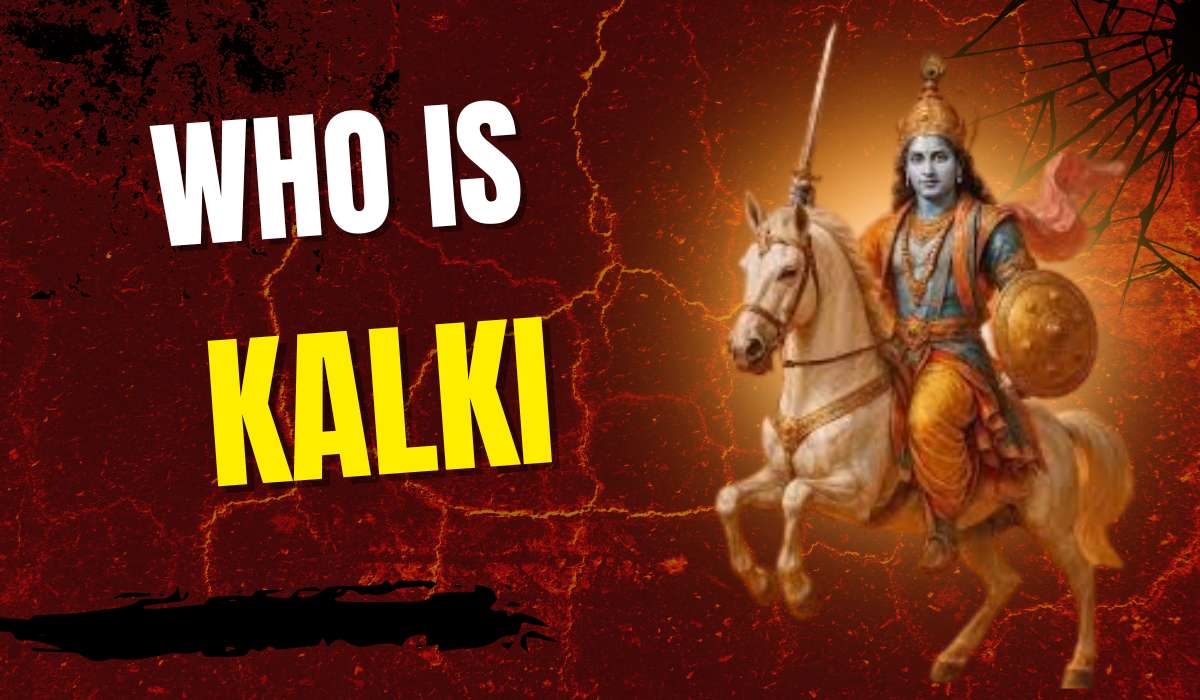
Who Is Kalki
In Hinduism, the concept of time is divided into four grand cycles known as the Yugas — Satya Yuga, Treta Yuga, Dvapara Yuga, and Kali Yuga. Each Yuga represents a gradual decline in righteousness and spiritual values. Hindu scriptures describe that whenever irreligion rises and the earth becomes burdened with sins, the Supreme Lord incarnates to re-establish dharma. In this cosmic journey of divine descents, the tenth and final avatar of Lord Vishnu is Kalki, who appears at the end of Kali Yuga. Kalki is not only a symbol of divine justice but also the harbinger of a new era of truth and purity.
This article explores, in depth, who Kalki is in Hinduism, why He comes, how scriptures describe Him, what signs will appear before His arrival, and what His mission will accomplish. Every section is expanded in a natural, human-written flow suitable for SEO, readability, and long-form blog content.
Meaning of the Name “Kalki” in Hinduism
The name Kalki comes from the Sanskrit word “Kalka”, which means dirt, darkness, or spiritual pollution. Therefore, Kalki literally means “The Remover of Darkness and Impurity.” Hinduism views Kalki as the divine force that ends the era of corruption, deceit, greed, and moral collapse.
Kalki is not simply a warrior figure; He represents the ultimate cleansing power of God. Through Him, the cosmic cycle transitions from the darkest age to a renewed golden era. Thus, Kalki symbolizes hope, justice, transformation, and divine intervention.

Scriptural Origin of Kalki: Where Is He Mentioned?
Kalki’s character is rooted deeply in ancient Hindu scriptures. He appears prominently in:
- Vishnu Purana
- Bhagavata Purana (Srimad Bhagavatam, Canto 12)
- Mahabharata
- Agni Purana
- Kalki Purana
- Padma Purana
Among these, Srimad Bhagavatam provides one of the earliest and most authoritative descriptions. It states that Kalki will be born in the village of Shambhala, to the noble Brahmana parents Vishnuyasha and Sumati.
The Kalki Purana, a later scripture, elaborates His life story, mission, battles, and the social conditions of Kali Yuga in detail. While its style is more poetic and devotional, it remains a beloved text among Kalki devotees.
Why Kalki Appears: The Purpose of His Divine Incarnation
According to the Bhagavad Gita, Lord Krishna declares:
“Yada yada hi dharmasya glanir bhavati…”
Whenever dharma declines and adharma takes over, the Lord incarnates to protect the righteous and destroy evil.
Kalki appears for exactly this purpose.
The world at the end of Kali Yuga will experience:
- Collapse of moral values
- Widespread corruption
- Hypocrisy in religious life
- Decline of truthfulness and compassion
- Abuse of power and wealth
- Disorder in family and social life
- Complete ignorance of spiritual knowledge
In such a spiritually exhausted world, Kalki emerges as the final restorer of dharma. His mission is not merely destruction; it is purification — preparing the earth for the next cycle of truth, known as Satya Yuga.
Physical Description of Kalki in Scriptures
Hindu texts describe Kalki as a radiant, divine warrior whose appearance is unlike any ordinary human. He embodies power, purity, and divine authority.
Scriptures describe Him as:
- Beautiful in form, glowing like a thousand suns
- Riding a celestial white horse named Devadatta
- Carrying a sword that shines like lightning
- Wearing divine ornaments and armor
- Possessing unmatched strength and supernatural capability
- Surrounded by loyal devotees, sages, and celestial beings
- Radiating the aura of the Supreme Lord Himself
Kalki’s form expresses both compassion for the righteous and fierce justice toward the wicked.
What Will Happen When Kalki Arrives?
The arrival of Kalki will not be a quiet spiritual event — it will be a dramatic, world-changing moment. Hinduism teaches that He will manifest when irreligion reaches its peak.
His Major Tasks Include:
1. Eliminating Evil Rulers and Corrupt Forces
Kalki will destroy the tyrants, wicked kings, and demonic influences ruling the world. These forces will have suppressed religion and exploited innocent people.
2. Ending the Final Phase of Kali Yuga
Kali Yuga is described as the age of quarrel, hypocrisy, and spiritual ignorance. Kalki’s arrival signals its conclusion.
3. Restoring Dharma
After removing evil influences, Kalki will establish a new wave of righteousness. Virtue, truth, compassion, and purity will re-emerge in society.
4. Beginning of Satya Yuga
Kalki’s mission culminates in the dawn of Satya Yuga, the golden age — an era marked by spiritual enlightenment and harmony.
The Timeline: When Will Kalki Appear?
Hinduism does not give a fixed date, but scriptures mention patterns and cycles. Kali Yuga is believed to last 432,000 years, and according to most traditional calculations, only around 5,000+ years have passed.
Therefore, many scholars conclude that Kalki is not expected to appear for thousands of years. However, some interpretations of the Kalki Purana and regional traditions suggest symbolic, cyclical manifestations.
Still, the mainstream understanding is that Kalki arrives at the final period of Kali Yuga — long after our current time.
Signs of Kalki’s Arrival According to Scriptures
Hindu texts describe dramatic social, moral, and environmental signs that will unfold before Kalki comes.
Major signs include:
- Widespread famine, diseases, and natural calamities
- Corrupt leaders dominating society
- Violence becoming common in daily life
- People rejecting spirituality and divine principles
- Misuse of science and technology
- Breakdown of family values
- Greed, deceit, and selfishness becoming normal
- Priests, gurus, and teachers turning materialistic
When these symptoms reach their absolute peak, Kalki manifests to restore universal balance.
Is Kalki a Historical Figure or a Future Avatar?
In Hinduism, Kalki is considered a future incarnation, not a historical one. Unlike Rama or Krishna, whose divine stories are part of ancient history, Kalki’s role belongs to the future timeline of cosmic evolution.
Because of this, Kalki is seen as a symbol of hope — a reminder that justice will ultimately triumph, even in the darkest times.
Kalki in Modern Culture: Pop Culture, Movies, and Literature
In recent decades, Kalki has inspired:
- Novels and fantasy fiction
- TV serials and movies
- Documentaries
- Graphic novels and animated films
- Spiritual lectures and online debates
Although many artistic interpretations take creative liberties, the core idea remains: Kalki is the ultimate divine warrior who ends corruption and restores purity.
Even outside India, scholars of mythology compare Kalki with figures like:
- The Messiah in Abrahamic traditions
- Maitreya Buddha in Buddhism
- Saoshyant in Zoroastrianism
This cross-cultural similarity highlights a universal human belief: a savior will emerge to restore balance.
The Symbolic Meaning of Kalki in Hindu Philosophy
While Kalki is a literal incarnation in Hindu theology, He also represents deeper symbolic truths.
Kalki signifies:
- The destruction of ignorance
- The victory of truth over falsehood
- The renewal of spiritual values
- The cleansing of the human heart
- The reminder that divine justice is inevitable
In this sense, Kalki is not only an external event but also an internal spiritual transformation.
Importance of Kalki Avatar in Devotional Practice
Devotees worship Kalki as a reminder that even when the world seems hopeless, God never abandons His creation. Many temples in India have Kalki shrines, especially in:
- Rajasthan
- Andhra Pradesh
- Karnataka
- Odisha
Devotees chant mantras like:
“Om Namo Bhagavate Kalki Devaya Namah”
to invoke purity, courage, and protection from negative influences.
Kalki Purana (ISKCON Book) — A Recommended Reading
ISKCON has published an English version of the Kalki Purana, which presents the divine story of Lord Kalki in an authentic Vaishnava style.
Why this book is recommended:
- Written with devotion and clarity
- Follows Gaudiya Vaishnava understanding
- Explains Kalki’s mission, parents, battles, and the dawn of Satya Yuga
- Ideal for devotees, students, and spiritual seekers
Conclusion: Who Is Kalki in Hinduism?
Kalki is the final avatar of Lord Vishnu, destined to appear at the end of the Kali Yuga. He represents divine justice, protection, courage, and the renewal of cosmic order. As the remover of darkness and the restorer of truth, Kalki marks the transition from chaos to purity, from ignorance to enlightenment, and from spiritual decay to rejuvenation.
For Hindus, Kalki is not merely a future event — He is a living symbol of hope. His story assures humanity that righteousness will always rise again, and that divine power ultimately triumphs over evil.

 Blue Moon